Showing posts with label News Alerts. Show all posts

New Report: Regional Center System on the Brink of Collape

Dear Everyone,

Below is an email communication I received today. This topic will touch all of us, even those who don't have a family member with a developmental disability, like autism. I could go down the moral path, jump on my soapbox and go on about society being defined by how it cares for those who cannot care for themselves, but for now I'll stick to the financial implications. The lack of funding to the Regional Centers - where the immediate cost of care is less expensive than the long term  cost of neglect - will impact our society as a whole when the bill comes due.  Simply put, if we do not fund early intervention, help individuals to reach their potential to become tax payers & live independently, and support families to keep individuals living in their homes vs costly and ineffective institutions individuals with DD's will be forced to rely on social services with tax payers footing 100% of the bill. This is an important issue for all of us. We all need to weigh in and be heard. For me it's simple, do I want a person who is being paid below minimum wage to care for my son when I can't? Who will give up their ability to live, to care of my family? Do I want my son living in a State Developental Center, where a shower is being hosed down by a fire hose? No I don't.  If you think this scenario is impossible watch the video from the 70's and wake up, then take action. Make a call. Write a letter. 

"We're Here to Speak for Justice"   http://www.lanterman.org/uploads/videos/video_werehere.html.  Here’s the link…please give it another go!  (new link 8/1/2011)

ARCA has released its newest report, titled On The Brink Of Collapse, meant to provide policy-makers, advocates, and the citizens of California an understanding of the crisis engulfing our state’s developmental services system.
Long-term underfunding of the service system has left both service providers and regional centers struggling to serve more people with fewer resources, which results in higher caseloads and less customization of service options. Today, service rates are lower despite the higher cost of living and working in California and caseload ratios are higher than in most other states. The result is a system that oftentimes is providing a servicerather than the right service, and is at risk of losing significant federal funding.

California spends less on its developmental services system for each resident of the state than most other states in the nation. When taking into account the relative wealth of each state, California’s performance is even lower and continues to decline.

In general, California’s rates for residential facilities, day and work services, and supported employment programs fall behind other large or western states. The impact of this difference is exacerbated by California’s high cost of living and other costs of doing business such as its highest-in-the-nation workers’ compensation premiums. In most metropolitan areas examined for this report, California’s service rates were lower, but the cost of living was significantly higher.

ARCA hopes this report will increase your understanding of the fiscal challenges California’s developmental services system faces in fulfilling its promise to individuals and their families and the urgent need for both short and long-term Budget solutions, which ARCA and the other Lanterman Coalition members support, to stabilize and advance the system. If questions arise regarding the enclosed report, please feel free to email us via this contact form.
The two prior reports, separately examining inadequate rates for service provision and underfunding of regional center operations, are also available.
Got this mailer from a friend?
Click here to be sure you won't miss future mailings!

Copyright © 2015 ARCA, All rights reserved.
You're receiving this email because you signed up for ARCA's updates on the Renew Early Start campaign and similar issues, or via our petition on this.

Our mailing address is:
ARCA
915 L Street, Suite 1440
Sacramento, CA 95814

Spread the Word! The International Day of Acceptance is January 20, 2015!

SPECIAL EDITION


Spread the Word! The International Day of Acceptance is January 20, 2015!
How will you celebrate this important day? On January 20, embrace the beautiful uniqueness of each and every member of the disability community by spreading the message of acceptance as far as you can. Learn how to get involved, share your #DayOfAcceptance story and let the world know what acceptance means to you! Here's how…

Permobil: The Power of Mobility
Pride Performance Mobility
Quantum Rehab
BraunAbility
Call David Korse at 310.450.8831 x3 to find out how you can sponsor the Abilities Buzz.


Buzz


Upcoming Expos
Los Angeles
March 6-8, 2015
Los Angeles Convention Center
New York Metro
May 1-3, 2015
New Jersey Convention & Expo Center
Chicago
June 12-14, 2015
Schaumburg Convention Center
Houston
July 31- Aug 2, 2015
NRG Center (Formerly Reliant Center)
Boston
September 18-20, 2015
Boston Convention and Exhibition Center
DC Metro
December 4-6, 2015
Dulles Expo Center

California Families Get to Make a Difference!

The big challenge - rebuilding our system - starts with you!
CHECK OUT THE TOOLS AT THE BOTTOM!!!  LET'S DO THIS!
Donna

The future is in our hands...

The development services system that affects so many lives needs to be rebuilt, and we need your help to do it!


Last spring, many voices came together to insist on Early Start being renewed. By working as a group with a single goal, eligibility was restored and thousands of at-risk infants and toddlers can once again access life-changing services. But beyond those thousands, there are hundreds of thousands of people with developmental disabilities already in our service system. They are able to live in communities of their choosing because of three main things: services and supports to help meet their needs (including their families' needs), dedicated service providers and direct support professionals, and regional centers coordinating and managing services and supports for nearly 280,000 Californians.

But years of chronic underfunding, rate freezes, and cuts have done great harm to our system. Recognizing this threat to the existence of the community service system, the 19-member Lanterman Coalition (including ARCA) has united around a solution to this challenge!

Our system needs a 10% across-the-board funding increase now, and 5% increases yearly, until funding for provider rates and regional center services is reformed.

But for this to happen, your voice and advocacy is needed. Only by individuals, groups, and coalitions coming together and telling their elected officials why this matters can we see the Lanterman Act preserved. To support this, the Coalition has prepared a number of tools, and we want you to share them far and wide.

Your advocacy matters! Our system is facing a monumental challenge. It’s big, it’s complicated, and there are a lot of moving parts. But we have to start somewhere, and a 10% budget increase for our system is the first step the Lanterman Coalition is rallying around. To make that – and comprehensive reform – happen, we need you to stand up for people with developmental disabilities, their families, service providers, and regional centers. The system that supports people to live in communities of their choosing needs you. Every voice throws light on a part of this common problem we are facing, and we need you to let your light shine!
10 things you can do
as an individual, or as a group of advocates who want our legislators to get the message - save our system!
Ideas for talking points
when you meet your representatives. For self-advocates, families, service provider organizations/employees, and regional center employees.
Extra tools
and supporting documents that will help you be best prepared to meet with your legislators.
Receive this from a friend?
Join our mailing list and receive it from the source!

Copyright © 2014 ARCA, All rights reserved.
You're receiving this email because you signed up for ARCA's updates on the Renew Early Start campaign and similar issues, or via our petition on this.

Our mailing address is:
ARCA
915 L Street, Suite 1440
Sacramento, CA 95814


Got this from a friend and don't want it? Please hit "reply" and ask them to take you off future mailings.
Got this from directly from us and don't want to be on our list any more? Unsubscribe here. =(  

Piano Helps Siblings With Autism to Mature, Find Their Voices

There are so many things I like about this story, not the least of which is I know music helps our kids! Since the goal with many of our kids is to create new connections in the brain, and the part of the brain that processes music, & singing is different from the part of the brain that processes speech, I've been pushing music on Nicky for years. He loves music, he likes to sing his favorite songs (with prompting) which makes music a fun and easy educational tool. I have also learned Nick has favorite songs, which is exciting all by itself. Bottom line, music is great for him and for me :) Yippee!  I'm thinking it will help with math too...well I'm praying!


BTW - anything that works on brain trauma patients has potential to help our kids who need to build new connections in the brain. Music is just one of those tools. 

Piano Helps Siblings With Autism to Mature, Find Their Voices


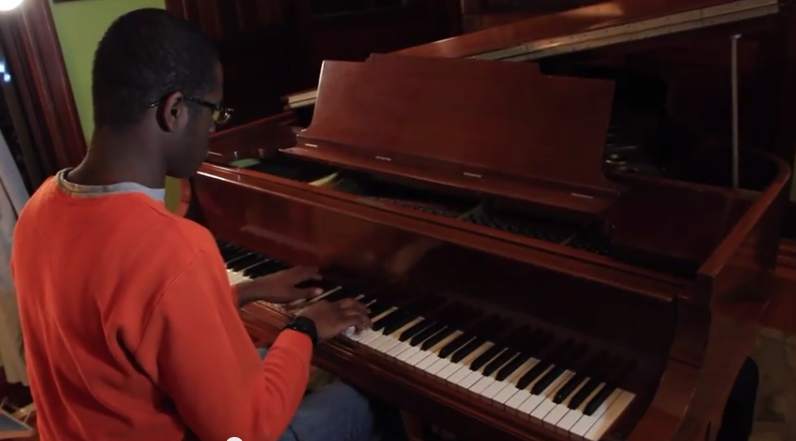
Autistic Justin Brown Plays Piano-RutgersU-submitted
Justin Brown and his sister Serena didn’t benefit much from traditional therapies to help autistic children. But when they were 8 and 7 years-old, they met Rutgers University instructor Karen Kowalski who teaches piano to kids with special needs.
“I’ve seen my children mature and grow,” said Monica Brown of the alternative therapy. “They’re much more open and much more focused.”
Justin, who was previously mute, has found his voice through music: “I love how music is comforting, because there are some parts of the piece that are happy. That’s when I smile.”
“Piano brought my children back to me,” says the grateful mom from Somerset, New Jersey.
WATCH the video below from Rutgers News

Jerry Seinfeld "I'm on the Autism Spectrum"

Jerry Seinfeld: I'm on the autism 'spectrum'

Jerry Seinfeld is known for joking around, but he's serious when he's talking about

autism. NBC's Brian Williams interviewed the comedian on Thursday's Nightly

News, calling Seinfeld "the most restless man in comedy" as they talked about

Seinfeld's popular Web series, Comedians in Cars Getting Coffee.

As part of the chat, the topic turned to Seinfeld and what makes him tick, about his love

for comedy and about still doing stand-up after all these years.

"Yeah. And this gets to a larger life perspective," says Seinfeld. "If you're more

interested in what you have achieved or what your financial position enables you to do

than that thing that got those things, you're screwed — in my opinion, you're screwed.

Williams notes that at 60, Seinfeld is still "figuring out who he is. For example: in recent

years as he's learned about autism spectrum disorders, he sees it in himself."

Seinfeld confirms that, saying, "I think, on a very drawn-out scale, I think I'm on the

spectrum." Why? What are the markers?" asks Williams.

"You know, never paying attention to the right things," says Seinfeld. "Basic social

engagement is really a struggle."

Seinfeld goes on to explain, "I'm very literal. When people talk to me and they

use expressions, sometimes I don't know what they're saying. But I don't see it as

dysfunctional. I just think of it as an alternate mindset."

Although most people with autism spectrum disorders have problems with social,

emotional and communication skills, these issues can vary widely, as Seinfeld

suggests. Some people on the autism spectrum may feel uncomfortable socializing, but

excel in math and science careers. Others on the spectrum may not speak or make any

eye contact at all, and shun human touch.

People with autism may repeat certain behaviors and avoid changes in their daily

activities, according to the Centers for Disease Control and Prevention. Many people

with autism also have different ways of learning, paying attention or reacting.

Contributing: Liz Szabo

Help Get The Word Out! Share this PSA & Increase Awareness about Autism Related Wandering

Step one was the creation of this PSA. Step two and most important is sharing to save lives.  You can share this link or send people directly to http://www.missingkids.com/awaare to watch the PSA. Doesn't matter how we do it, only that we do.  Thanks!!!


Additional resources

If you are looking for more information about autism and wandering, check out these resources.

The National Center for Missing & Exploited Children is dedicated to raising awareness of wandering in the autism community.

The AWAARE Collaboration has a mission to prevent autism-related wandering incidents and deaths.
  • Frequently Asked Questions - Answers to some of the most common questions regarding wandering in the autism community.
  • Big Red Safety Toolkit - Download tools and resources for caregivers of someone with an autism spectrum disorder who is prone to wandering.


Bullies without Boundaries! Ice Bucket Challenge turned into sick joke against teen with autism

How is it that some people always find a way to turn something wonderful into something horrific. Once again, one of our unsuspecting kids who could never conceive doing something so horrible to another person is abused. So sad. I am speechless. 


**Important note: The family asked that we show the video to make other parents aware of bullying.**
BAY VILLAGE, Ohio – Police are investigating an alleged case of bullying involving a teenager with autism who took the ALS Ice Bucket Challenge.
“Once we found out about it, we were just horrified,” said Diane, the mother of the Bay High School student.  She claimed her youngest son was videotaped as feces, urine, spit and cigarette butts were dumped on his head by a group of juveniles.
“I want these kids held accountable for what they did to him and they targeted somebody who just didn’t really understand what was going on,” she said.
FOX 8 News is not identifying the family by last name to help protect their son.
According to the victim’s mom, Diane, the video was discovered on her 15-year-old son’s cell phone. She, along with her husband and other son, Jacob, wants it to be made public.
“I mean, the first thing that popped into my mind was like, why could someone – how could someone do this?” said Jacob. “How could someone really be this cruel to someone?”
In the video, the boy with autism is seen standing in the driveway of a home off school grounds. He’s wearing only his underwear as a bucket of fluid is poured from the roof of the garage. The bucket allegedly contained a mix of bodily fluids instead of ice water.
“He was embarrassed because he did not know what the contents were until afterwards and then he didn’t want anybody to know,” said his mom. “They used his phone to tape it and they put it up on Instagram.”
“This is just too far. It’s really bad,” said his brother, Jacob.
The Bay Village Police Department was made aware of the alleged incident on Wednesday. According to Det. Kevin Krolkosky, criminal charges could be filed.
“It’s disturbing to watch, you can obviously tell that somebody has been taking advantage of there,” said the detective.
Det. Krolkosky met with the parents and said it’s not a prank; it’s possibly a crime committed on the boy with autism by a group of juveniles who could face delinquency charges.
A spokesperson for Bay High School, where the victim is a student, said they’re now working hand-in-hand with police as they investigate.
“Obviously, if possible, we do want to hold those individuals accountable for their actions,” said Det. Krolkosky.
The police are just beginning their investigation and we’re told it could take a few weeks to file charges but they have a good idea who was involved.
“The bucket challenge is supposed to be raising awareness for this disease and now they’ve turned it into a sick joke,” said the victim’s mom. “I just can’t understand why kids would do something this cruel.”
The boy’s mom and dad wanted the video released to make other parents aware of bullying so they’ll have a conversation with their kids on how to treat people.

Superior Court Encourages Lawyers to Violate Rights of People with Developmental Disabilities


Thanks to a mom who's been through Hell and wanted to share her story to help others, I've been made aware of the unthinkable challenges that can happen around Conservatorships, especially in families where the parents are divorced.  When I first heard their story my automatic response was "This can't be, it's just too terrible. It must be an isolated case". When I began asking more people I learned many families were dealing with this, and it was not something I could afford to ignore. My son will be 18 soon enough, and his rights will kick in and I need to know the realities of raising an "adult" with autism and conservatorships. Below is a summary of the issue, and a link to a guide showing recent research findings, and it suggests ways our attorneys can challenge these guidelines when needed.
________

The Disability and Abuse Project released a new report today that focuses on deficiencies in the performance of attorneys appointed to represent people with developmental disabilities in limited conservatorship proceedings in California.
The report was released in the form of a guidebook, designed to help court-appointed attorneys challenge judicial guidelines that encourage them to engage in practices that may violate ethical and constitutional requirements.
Here is a description of the guidebook, taken from the Project's website:
This guidebook releases research findings by the Disability and Abuse Project regarding the policies and practices of the Los Angeles Superior Court.  It reveals how court guidelines encourage attorneys to violate the rights of people with developmental disabilities in limited conservatorship cases.  The guidebook calls for systemic changes, but until they occur, it suggests ways that attorneys can challenge these guidelines by using advocacy methods consistent with the ethical and constitutional duties and that protect the right of clients to due process of law
The report was sent to 50 attorneys who regularly represent clients in limited conservatorship proceedings.  It was sent two weeks in advance of a mandatory training seminar they will be attending on September 13.  It was also sent to the panelists who will be making presentations on many of the topics covered in the report.  We hope that the receipt of the guidebook prior to the seminar will stimulate a lively discussion about the proper role of attorneys in such cases and what attorneys should do to comply with ethical and constitutional requirements.
It was also sent to all members of the Board of Trustees of the State Bar of California, with a request that the State Bar convene a Task Force on Limited Conservatorships to study the problems outlined in the report and to make recommendations to the State Bar about how to improve the performance of attorneys handling such cases.
For more information, including a link to the guidebook and links to the letters mentioned above, go to:   http://disabilityandabuse.org/pvp/index.htm


This is How a 10-Year-Old Boy With Autism is Treated in a Police State

Is it getting worse, or are we just paying closer attention? It was reported that the school did not call the parents before calling the police, and even though his dad did arrive before the police, he was denied access to his son to calm him down. 

If you wonder why I post these awful stories, it's because it's hard to talk about this, it's hard to imagine this could even happen to our kids, but if it happens to one child it could happen to our child. I believe the only defense we have is awareness, if we're going to keep our kids safe in this crazy world. 
Donna 


A photo, taken at Cypress Elementary in the Lakeside Community, in Kissimmee, FL, submitted to the Free Thought Project this week, paints a very disturbing picture.

boy-cruiser

The photo is of a 10 year old child handcuffed, laid out on the back of a police cruiser. The boy’s name is Ryan and he has autism. According to Ryan’s mom, Elaine Maldonado:
He had difficulty being redirected which resulted in a really bad meltdown. My son made threats to harm himself with scissors which were accessible to him from the teacher’s desk. The principal did not call us, but did call law enforcement to have him Baker acted.
The teacher did call my husband and he arrived at the school within minutes and 10 minutes before law enforcement. Upon his arrival he was told that he could not see Ryan because he would be interfering with an investigation and would risk being arrested.
When three law enforcement officers arrived to the classroom, Ryan was still very upset. They proceeded to drag him down the hall, passed by my husband who was very upset and placed him on the trunk of the police car on one of the hottest days of the week (100 degrees if not higher – police officer states this in his report ) and handcuffed him in front of the school and held him down on the hot car for several minutes before communicating to my husband that they planned to baker act him.
The Florida Mental Health Act of 1971, commonly known as the Baker Act allows the involuntary institutionalization and examination of an individual. It can be initiated by judges, law enforcement officials, physicians, or mental health professionals.
Basically this child was going to be taken from his parents, against their will, by cops, acting on behalf of a school principal, and put into state custody for displaying behavior that parents of autistic children are all too familiar with. According to the police report, the boy was thrown on top of the car because the pavement was too hot. Apparently the car, in 100+ degree Florida weather, was a welcomed cooling zone.
report
The fact that police were called to a school because teachers could not control a 10 year old speaks to the level of incompetence and lack of training within the school. Also the fact that the principal would not allow Ryan’s dad to see his son, and possibly diffuse the situation prior to his son being cuffed and stuffed, shows just how dependent the system is on the application of state force.
Ryan’s mother posed a very good question, “If he (the principal) was so concerned that he would harm himself why would he wait 10 minutes for the cops to arrive?”
The fact that the principal refused to allow a father to see his son, and waited until police arrived is a disturbing symptom of a much larger systemic problem. This problem has to do with society’s dependence upon state sanctioned force to solve problems. This dependency is so strong that the principal would not even let the boy’s own father try and calm his son. He could not see that as a solution; the only solution (in this principal’s mind) was that of state force.
The Free Thought Project reached out to the family Friday to see if they were able to file a complaint against the Kissimmee Police department, and according Mrs. Maldonado, ” The Chief of Police stands by his team.”
The family is however, planning on taking legal action against the school because they claim the principle violated their parental rights.
We asked the Maldonado’s how Ryan is doing now and if they have him back in their custody. They do have him back and they explained, “He doesn’t want to return to school. And he continues to repeat everything he heard administration and law enforcement talk about – Baker Act etc.”
Read more at http://thefreethoughtproject.com/10-year-old-boy-autism-treated-police-state/#eyzj8ywg1WoOYjGI.99

Disney Faces More Heat As Autistic Kids Lawsuit Looks To Expand

Give em Hell! There had to be a better solution. There are always going to be people who abuse things, but pouring out the baby with the bath water is no solution. Find a better way Disney Parks and Resort…you can do it!

__________________________________________

Disney Faces More Heat As Autistic Kids Lawsuit Looks To Expand 


    VS 


Deadline.com EXCLUSIVE:  Walt Disney Parks and Resorts could be facing a lot more angry families of children with developmental disorders if the plaintiffs in the ongoing American With Disabilities Act lawsuit get their way. In fact, the discrimination suitover access at Disneyland and other theme parks filed back in April against the media giant could nearly triple. “After the initial Complaint was filed, undersigned counsel received an outpouring of phone calls and emails from victims and their families, similarly situated to the 26 existing Plaintiffs,” said lawyers Andy Dogali and Eugene Feldman in one of several filings today in federal court (read it here). “Most of the victims wanted to offer cheers of support and witness assistance; some were in search of counsel. Ultimately, the undersigned counsel agreed to represent many of them.”

The attorneys are requesting to amend the original complaint to add another 69 plaintiffs to the two dozen-plus already involved. Disney, of course, is opposed to this, and the whole matter of the addition likely will be decided during an October 6 hearing before Judge Manuel Real. Of the 69 potential new plaintiffs, 36 are disabled and 33 are “family members who bring individual tort and contract claims.” Presently 16 of the plaintiffs are “allegedly disabled,” according to the proposed order submitted today (read it here), and 10 are family members.
This all started in October when, in an effort to weed out scammers, Disney got rid of the long-standing Guest Assistance Card program and introduced the Disability Access Service at its parks and resorts in Florida and California. Unlike the front-of-the-line and staff-sensitive GAC, the new system proved disruptive and detrimental to the children in question say the plaintiffs. In their initial suit filed in the spring, the guardians of the children claimed they were now disrespected by Disney employees, stuck in long lines to which individuals with conditions like autism and other cognitive impairments were very unsuited – all of which led to “meltdown behaviors” and the children having to leave the park or sometimes being asked to leave. Citing trauma and suffering as well, the 57-count complaint sought damages, injunctive relief and declaratory relief for violations of the ADA and the Unruh Civil Rights Act.
Disney rather bloodlessly rejected the claims in early July and asked for the case to be dismissed. Disney also denied the existence of the so-called “Magic List,” which supposedly grants selected very VIP persons no-wait, no-appointment-necessary ride passes among its privileges. The plaintiffs have suggested a version of the Magic List could provide the solution to their problem. At the end of July, Disney attempted to have the case moved to Florida federal court, where it undoubtedly feels the company will get a more sympathetic reception as one of the state’s largest employers. There has been no decision yet on that request.
Rhonda Trotter and Daniel Paluch of LA firm Kaye Scholer LLP are representing Disney in the case.
For all of Deadline’s headlines, follow us @Deadline on Twitter


Older Post ►
 

Copyright 2011 Autism 2 Daily is proudly powered by blogger.com