Showing posts with label Science Research Updates News. Show all posts

News: Autism Genes Active During Fetal Development

Genes Connected to Autism Active During Fetal Development

February 22, 2015 | by Lisa Winter
photo credit: vetre/Shutterstock
Autism Spectrum Disorder (ASD) affects about 1 in 68 children. Genetics plays a large role in the onset of ASD, but the exact genes involved are not clearly defined. However, a new paper published in Neuron describes how specific genes known to be connected to ASD are active during fetal brain development. Lilia Iakoucheva of the University of California, San Diego headed up the research.
The study focused on copy number variants (CNVs) in particular regions that have previously been connected to ASD. However, the researchers soon learned that not all CNVs were activated during the same growth period. Activation of various CNVs was staggered throughout fetal development. 
The two genes, known as KCTD13 and CUL3, have ASD-associated mutations, and become activated around the middle of development. These genes regulate the protein RhoA, which is crucial to brain development. RhoA is responsible for the development and maintenance of neurons, while also assisting in the regulation of their migration.
"The most exciting moment for us was when we realized that the proteins encoded by these genes form a complex that regulates the levels of a third protein, RhoA," Iakoucheva said in a press release. "Suddenly, everything came together and made sense.”
Image credit: UC San Diego School of Medicine
“Our model fits perfectly with what we observe in the patients," co-first author Guan Ning Lin added.
Using zebrafish (a common model organism in genetics), they found that certain mutations on CUL3 adversely affected KCTD13, which, in turn, affected the normal function of RhoA. Just as the zebrafish with these mutations had head sizes that differed from typical development, so do children with ASD. Additionally, the mutations also correlated to the weight of the fish, just as it does in humans.
Moving forward, it is hoped that obtaining a better understanding of these genetic pathways and how they connect to various disorders on the Autism spectrum will allow researhers to manipulate these pathways into a potential treatment.
"The fact that three different types of mutations may act via the same pathway is remarkable," concluded Iakoucheva. "My hope is that we would be able to target it therapeutically. If we can discover the precise mechanism and develop targeted treatments for a handful of children, or even for a single child with autism, I would be happy.”

Up To 80% Of Children With Autism Have Difficulty Sleeping


Nick didn’t sleep when he was inside of me, now he is 16 and still can’t sleep without assistance. When most kids have drifted off to dreamland Nick is manic and bouncing off the walls. It’s a side of autism no one told me about until we had suffered for years. Found this and wanted to share.

Helping Your Child With Autism Get a Good Night's Sleep
 WEBMD
During the first few months of life, babies ease into a normal cycle of sleep and wakefulness. They gradually reduce the number of daytime naps they need and start sleeping for longer periods of time at night. But some children continue to have difficulty falling asleep or sleeping through the night, and the problem can persist long after children start school.
Sleep disorders may be even more common in children with autism. Researchers estimate that between 40% and 80% of children with autism have difficulty sleeping. The biggest sleep problems among these children include:
·         Difficulty falling asleep
·         Inconsistent sleep routines
·         Restlessness or poor sleep quality
·         Waking early and waking frequently
A lack of a good night's sleep can affect not only the child but everyone in his or her family. If you're bleary-eyed from night after night of waking up with your child, there are a number of lifestyle interventions and sleep aids that can help.
What causes sleep disorders in children with autism?
Researchers don't know for sure why autistic children have problems with sleep, but they have several theories. The first has to do with social cues. People know when it's time to go to sleep at night, thanks to the normal cycles of light and dark and the body's circadian rhythms. But they also use social cues. For example, children may see their siblings getting ready for bed. Children with autism, who often have difficulty communicating, may misinterpret or fail to understand these cues.
Another theory has to do with the hormone melatonin, which normally helps regulate sleep-wake cycles. To make melatonin, the body needs an amino acid called tryptophan, which research has found to be either higher or lower than normal in children with autism. Typically, melatonin levels rise in response to darkness (at night) and dip during the daylight hours. Studies have shown that some children with autism don't release melatonin at the correct times of day. Instead, they have high levels of melatonin during the daytime and lower levels at night.
Another reason children with autism may have trouble falling asleep or awaken in the middle of the night could be an increased sensitivity to outside stimuli, such as touch or sound. While most kids continue to sleep soundly while their mother opens the bedroom door or tucks in the covers, a child with autism might wake up abruptly.
Anxiety is another possible condition that could adversely affect sleep. Children with autism tend to test higher than other children for anxiety.
What kind of effects do sleep problems have?
Not getting a good night's sleep can have a serious impact on a child's life and overall health. Research has shown that, in children with autism, there is a connection between lack of sleep and the following characteristics:
·         Aggression
·         Depression
·         Hyperactivity
·         Increased behavioral problems
·         Irritability
·         Poor learning and cognitive performance
If your child isn't sleeping, there's a good chance you aren't, either. One study showed that the parents of autistic children sleep less, have poorer sleep quality, and wake up earlier than parents of non-autistic children.
How do I know whether my child has a sleep disorder?
Every child needs a slightly different amount of sleep. In general, these are the amounts of sleep children require, by age:
·         Ages 1-3: 12-14 hours of sleep per day
·         Ages 3-6: 10-12 hours of sleep per day
·         Ages 7-12: 10-11 hours of sleep per day
If your child regularly has difficulty falling asleep or wakes up repeatedly throughout the night, it might be a sign of a sleep problem. To know for sure, make an appointment with your child's pediatrician. The doctor may refer you to a sleep specialist or an ear, nose and throat doctor.
It can help to keep a sleep diary for a week to track how much and when your child is sleeping. You may include any snoring, changes in breathing patterns, or difficulty breathing. You can share this diary with your child's doctor and any specialist involved in treatment.
How can I help my child sleep better?
Sleep medications should only be used with children as a last resort . There are a number of lifestyle changes and natural sleep aids that can improve sleep time and quality for kids with autism:
·         Avoid giving your child stimulants such as caffeine and sugar before bed.
·         Establish a nighttime routine: give your child a bath, read a story, and put him or her to bed at the same time every night.
·         Help your child relax before bed by reading a book, giving a gentle back massage, or turning on soft music. 
·         Shut down television, video games, and other stimulating activities at least an hour before bedtime.
·         To prevent sensory distractions during the night, put heavy curtains on your child's windows to block out the light, install thick carpeting, and make sure the door doesn't creak.
·         Ask your pediatrician about giving your child melatonin just before bedtime. This dietary supplement is often used as a sleep aid to help people get over jet lag. It may help normalize sleep-wake cycles in autistic children who have sleeping issues, and research done so far finds that it's safe and effective.
·         Talk to a sleep psychologist about bright-light therapy. Exposing the child to periods of bright light in the morning may help regulate the body's release of melatonin.

WebMD Medical Reference
SOURCES:
WebMD Feature: "How Much Sleep Do Children Need?"
Richdale AL. Developmental Medicine & Child Neurology, 1999.
The National Autistic Society: "Sleep and autism: helping your child."
Meltzer LJ. Journal of Pediatric Psychology, 2008.
Andersen IM, Kaczmarska J, McGrew SG, Malow BA. Journal of Child Neurology, 2008.


Play Stressful for Kids With Autism

Brain scans also reveal apparent lack of social recognition during video play, researchers say


FRIDAY, Feb. 13, 2015 (HealthDay News) --
Children with autism appear to approach play differently than typically developing children, a recent study contends. Article Link: http://www.webmd.com/brain/autism/news/20150213/play-may-be-more-stressful-for-kids-with-autism-study
"Children with autism lack a social component to their play and don't 'adjust' their play accordingly when another is involved," said study co-author Blythe Corbett, an associate professor of psychiatry at Vanderbilt University in Nashville. 
"For example, they tend to interact less with other children and show a preference to play alone or nearby with objects even when other children are near," she said.
Autism is a developmental disorder in which children have trouble communicating with others and exhibit repetitive or obsessive behaviors. About one in 68 children in the United States has been diagnosed withautism spectrum disorder, according to the U.S. Centers for Disease Control and Prevention.
In the new study, researchers conducted a series of experiments with 42 children, aged 8 to 12, who either had an autism spectrum disorder or were typically developing. The investigators collected samples of cortisol, a stress hormone, from the children's saliva before and after playing on the playground with another child.
"The arousal level of the children with autism during play suggests that interaction with peers can be quite stressful," Corbett said. "In this study, we also found a relationship between brain activity during play, behavior and stress level."
All of the children underwent brain scans while playing a computer game in which they believed they were playing a real person half the time and a computer the other half.
"Typical children showed vast differences based on play with human versus computer partners," Corbett said. "While we know that children with autism have difficulty with social play, the current study showed that the brain patterns of children with autism spectrum disorders activate similar brain regions regardless of whether they are playing with a child they met or playing with a computer partner."
One expert said the study, published recently in the journal Social Cognitive and Affective Neuroscience, had limitations.
"This study is attempting to provide some level of physiological measure to assess how children with autism spectrum disorders respond differently from neurotypical children during play," said Dr. Glen Elliott, chief psychiatrist and medical director of Children's Health Council in Palo Alto, Calif.
But he pointed out aspects of the study that limit its usefulness, such as only including children with autism who had higher IQs (at least 80). The study also only showed that changes in the brains of children with autism existed, but not why they existed.
"We cannot use the data to infer an understanding of how brains of children with autism spectrum disorders differ from those without autism," Elliott said. "It may well be that the children with autism understood the rules in ways different from [comparison] children. If so, that difference in understanding may be the cause of the difference in brain scan results."
So what does "play" look like for children with autism? Elliott said that depends on the severity of their condition, their interest in an activity and their level of mental functioning.
"In general, children with autism are less able to do pretend play and less able to put themselves in the position of trying to understand what someone else may be thinking or feeling," Elliott said.
The aspect of the study that rang true for parenting a child with autism was the stress of socializing, said Shannon Des Roches Rosa, of Redwood City, Calif., whose 14-year-old son has autism. That stress may even be greater under artificial circumstances, such as a lab, she said.
"Mostly I've learned to let my son do the kind of play that makes him happy rather than prod him toward the kind he 'should' be doing," Des Roches Rosa said. "What may not look like play by non-autistic standards is deeply satisfying to kids like my son."
Her son's play usually involves intense sensory activities, such as kicking balls back and forth or jumping on a trampoline, she said. He also enjoys his iPad, particularly apps that can be activated with focused tapping, she added.
Corbett said that the play of children with autism tends to be more repetitive and more focused on computers, videos and technology than on engagement with other children.
For children with autism, some social-skills programs with peers might help increase interest in social play while reducing stress, she suggested.

"Parents can provide opportunities for children with autism spectrum disorders to play with positive, supportive peers to enhance their interest, motivation and aptitude to play with others," Corbett said. "It may help to reduce the amount of computer use and play with videos."
Elliott said this study may not offer many insights to parents of children with autism because they already know that getting them to play with peers is difficult.
"Perhaps they [parents] can take heart in the possibility that studies like this are beginning to map out what parts of the brain engage in certain activities," Elliott said. "But that is a long way from figuring out how to change the observed differences."


Half Of All U.S. Children Will Be Autistic By 2025 - MIT Researcher’s New Warning

MIT Researcher’s New Warning: At Today’s Rate, Half Of All U.S. Children Will Be Autistic By 2025


Research scientist Stephanie Seneff of the Massachusetts Institute of Technology (MIT), a widely published author on topics ranging from Azlheimer’s Disease to autism and cardiovascular disease, raised plenty of eyebrows recently with a bold proclamation on autism at a special panel in Massachusetts about genetically modified organisms and other topics.
“At today’s rate, by 2025, one in two children will be autistic,”  Seneff said last Thursday in Groton, MA at an event sponsored by the holistic-focused Groton Wellness organization.  
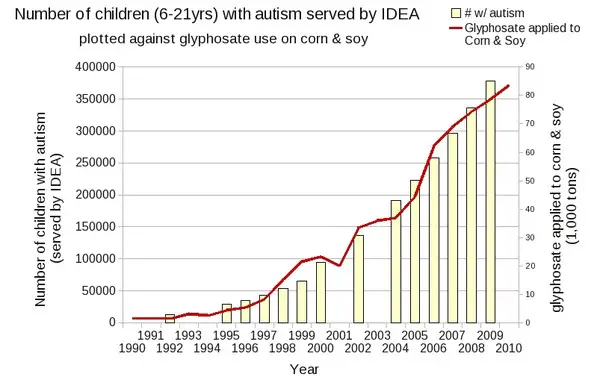
Seneff presented slides showing a remarkably consistent correlation between the rising use of Roundup (with its active ingredient glyphosate) on crops and the rising rates of autism; while it doesn’t show a direct correlation it does give researchers plenty to think about, especially considering Seneff’s research into the side effects of autism that mimic glyphosate toxicity and deficiencies.
gloysphate
The slide notes that the heaviest use of Roundup, Monsanto’s flagship weedkiller, began in 1990 and continued to rise since. Meanwhile, the  number of kids with autism has gone from 1 in 5,000 in 1975 to 1 in 68 today, a puzzling and frustrating stat that shows no signs of slowing down and one that correlates strongly with the rise in glyphosate use.
Of course, autism is a complex problem with many potential causes, but the numbers are particularly of note considering how close the correlation is, and Seneff’s credentials.
Dr. Seneff has written 10 papers (7 as the first author) in various medical and health journals on modern diseases as well as drug side effects, nutritional deficiencies and the impacts of environmental toxins on our health. She also worked as a Senior Research Scientist at the MIT Computer Science and Artificial Intelligence Laboratory before turning to biology, as her official biography notes.
You can read more about her presentation on the website The Complete Patient by clicking here, and you can also check out the full versions of her slides on glyphosate and autism by clicking here.

EPA DEBATING ROUNDUP BAN OR RESTRICTIONS, ARE THEY BEING OBJECTIVE?

Recently, the group Moms Across America visited with officials from the EPA to discuss a potential ban or restrictions on Roundup, especially in light of recent findings that the active ingredient glyphosate is found in the breast milk of American mothers at levels that are a dangerous 760 to 1600 times higher than allowable limits in European drinking water.
While the group made its point loud and clear, it is well worth noting than many of the 100 studies provided for the EPA’s review were actually provided by the chemical companies themselves.
Urine testing has also shown that Americans have 10 times the glyphosate accumulation in their urine than Europeans, and children with autism have many biomarkers indicating excessive glyphosate in their systems including key mineral deficiencies, seizures and mitochondrial (the cell’s power center) disorders.

SENEFF RESPONDS TO MONSANTO’S KEY ARGUMENT

While Monsanto claims that Roundup is harmless because humans don’t have a shikimate pathway, which it inhibits, Seneff notes that our gut bacteria do have this pathway, and that’s crucial because these bacteria supply our body with crucial amino acids.
She also says that most studies are too short to show Roundup’s oft-studied effects as a cumulative toxin, one that builds up both in the environment and in our bodies over time.
According to Seneff, Roundup has the following side effects: it kills beneficial gut bacteria, allowing pathogens to grow; interferes with the synthesis of amino acids and methionine which leads to shortages in critical neurotransmitters and folate; chelates (removes) important minerals like iron, cobalt and manganese, and much more.
Additional chemicals in Roundup are untested because they’re classified as “inert,”she notes in her presentation, butaccording to a 2014 study in BioMed Research International they are capable of amplifying the ill effects of Roundup hundreds of times over.
To learn more about Seneff’s warning over autism and Roundup accumulation, you can view her slideshow on the topic. Until then, it’s best to exercise caution, and to buy and grow organic food whenever possible.
Dr. Stephanie Seneff, senior researcher at MIT, speaking at this year’s Autism One conference:

link between neural stem cell overgrowth and autism-like behavior

UCLA study finds link between neural stem cell overgrowth and autism-like behavior in mice
People with autism spectrum disorder often experience a period of accelerated brain growth after birth. No one knows why, or whether the change is linked to any specific behavioral changes.
A new study by UCLA researchers demonstrates how, in pregnant mice, inflammation, a first line defense of the immune system, can trigger an excessive division of neural stem cells that can cause “overgrowth” in the offspring’s brain.
The paper appears Oct. 9 in the online edition of the journal Stem Cell Reports. 
“We have now shown that one way maternal inflammation could result in larger brains and, ultimately, autistic behavior, is through the activation of the neural stem cells that reside in the brain of all developing and adult mammals,” said Dr. Harley Kornblum, the paper’s senior author and a director of the Neural Stem Cell Research Center at UCLA’s Semel Institute for Neuroscience and Human Behavior.
In the study, the researchers mimicked environmental factors that could activate the immune system — such as an infection or an autoimmune disorder — by injecting a pregnant mouse with a very low dose of lipopolysaccharide, a toxin found in E. coli bacteria. The researchers discovered the toxin caused an excessive production of neural stem cells and enlarged the offspring’s’ brains.
Neural stem cells become the major types of cells in the brain, including the neurons that process and transmit information and the glial cells that support and protect them.
Notably, the researchers found that mice with enlarged brains also displayed behaviors like those associated with autism in humans. For example, they were less likely to vocalize when they were separated from their mother as pups, were less likely to show interest in interacting with other mice, showed increased levels of anxiety and were more likely to engage in repetitive behaviors like excessive grooming.
Kornblum, who also is a professor of psychiatry, pharmacology and pediatrics at the David Geffen School of Medicine at UCLA, said there are many environmental factors that can activate a pregnant woman’s immune system.
“Although it’s known that maternal inflammation is a risk factor for some neurodevelopmental disorders such as autism, it’s not thought to directly cause them,” he said. He noted that autism is clearly a highly heritable disorder, but other, non-genetic factors clearly play a role.
The researchers also found evidence that the brain growth triggered by the immune reaction was even greater in mice with a specific genetic mutation — a lack of one copy of a tumor suppressor gene called phosphatase and tensin homolog, or PTEN. The PTEN protein normally helps prevent cells from growing and dividing too rapidly. In humans, having an abnormal version of the PTEN gene leads to very large head size or macrocephaly, a condition that also is associated with a high risk for autism.
“Autism is a complex group of disorders, with a variety of causes,” Kornblum said. “Our study shows a potential way that maternal inflammation could be one of those contributing factors, even if it is not solely responsible, through interactions with known risk factors.”
In addition, the team found that the proliferation of neural stem cell and brain overgrowth was stimulated by the activation of a specific molecular pathway. (A pathway is a series of actions amongmolecules within a cell that leads to a certain cell function.) This pathway involved the enzyme NADPH oxidase, which the UCLA researchers have previously found to be associated with neural stem cell growth.
“The discovery of these mechanisms has identified new therapeutic targets for common autism-associated risk factors,” said Janel Le Belle, an associate researcher in Kornblum’s lab and the paper’s lead author. “The molecular pathways that are involved in these processes are ones that can be manipulated and possibly even reversed pharmacologically.
“In agreement with past clinical findings, these data add to the significant evidence that autism-associated brain alterations begin prenatally and continue to evolve after birth,” she said.
Kornblum added that the findings that neural stem cell hyper-proliferation can contribute to autism-associated features may be somewhat surprising. “Autism neuropathology is primarily thought of as a dysregulation of neuronal connectivity, although the molecular and cellular means by which this occurs is not known,” he said. “Therefore, our hypothesis — that one potential means by which autism may develop is through an overproduction of cells in the brain, which then results in altered connectivity — is a new way of thinking about autism etiology.”
The next step, the researchers say, is to determine if and how the changes they observed lead to changes in the connections between brain cells, and if those effects can be altered after they have happened.

The study’s other authors were Jantzen Sperry, Amy Ngo, Yasmin Ghochani, Dan Laks, Manuel López Aranda and Alcino Silva, all of UCLA. Support was provided by the Dr. Miriam and Sheldon G. Adelson Medical Research Foundation, Autism Speaks and the National Institutes of Health (grants P50-HD-055784 and MH65756), and other entities. 

VISION, HEARING OUT OF SYNC FOR KIDS WITH AUTISM, STUDY SAYS

Once again, Science is catching up :).


Wednesday, September 10, 2014
The latest research shows one in 68 children will be diagnosed with autism. Many of these kids struggle with making friends, communicating with others, and social interactions in general.

While no one yet knows what causes autism, scientists at Vanderbilt University are finding out exactly what's out of sync when children with autism try to express themselves and communicate with others.

"Generally I would describe having asperger's syndrome as being like a computer that's running a different operating system than what most computers are running," said 16-year-old Austin Miller, who has asperger's.

Diagnosed at age 12, his mom Karen says she's always noticed a delay in the way he processed speech.

"I would say something to him and then I would say, 'Austin, did you?' and then he would start to answer. And so I learned, I have to give him more time," she said.

Now a new study is helping explain why. Headed up by Dr. Mark Wallace, a team at Vanderbilt found what kids with autism see is out of sync with what they hear.

"It's like a badly dubbed video is the way we describe it," said Wallace.

In some, the timing can be completely off.

"And we believe that, that change in the binding of visual and auditory information is sort of the foundation for the problems that they have in things like language and communication and social interactions," said Wallace.

That sounds spot on to Austin.

"I think I can see a couple memories where I'm talking to my dad and maybe his mouth just looks a little bit out of sync," he said.

Researchers are building on that knowledge by testing a new interactive video game that's designed to retrain the brains of those with autism, focusing on how rewards help the brain.

"So it basically takes the tuning of the nervous system and shapes it, so that they get better," said Wallace.

The ultimate goal is to help kids like Austin communicate better.

The study also helps explain why some children with autism are often seen covering up their ears or eyes; it could be the delay in sight and sound that confuses them and makes them focus on one sense at a time.
Older Post ►
 

Copyright 2011 Autism 2 Daily is proudly powered by blogger.com